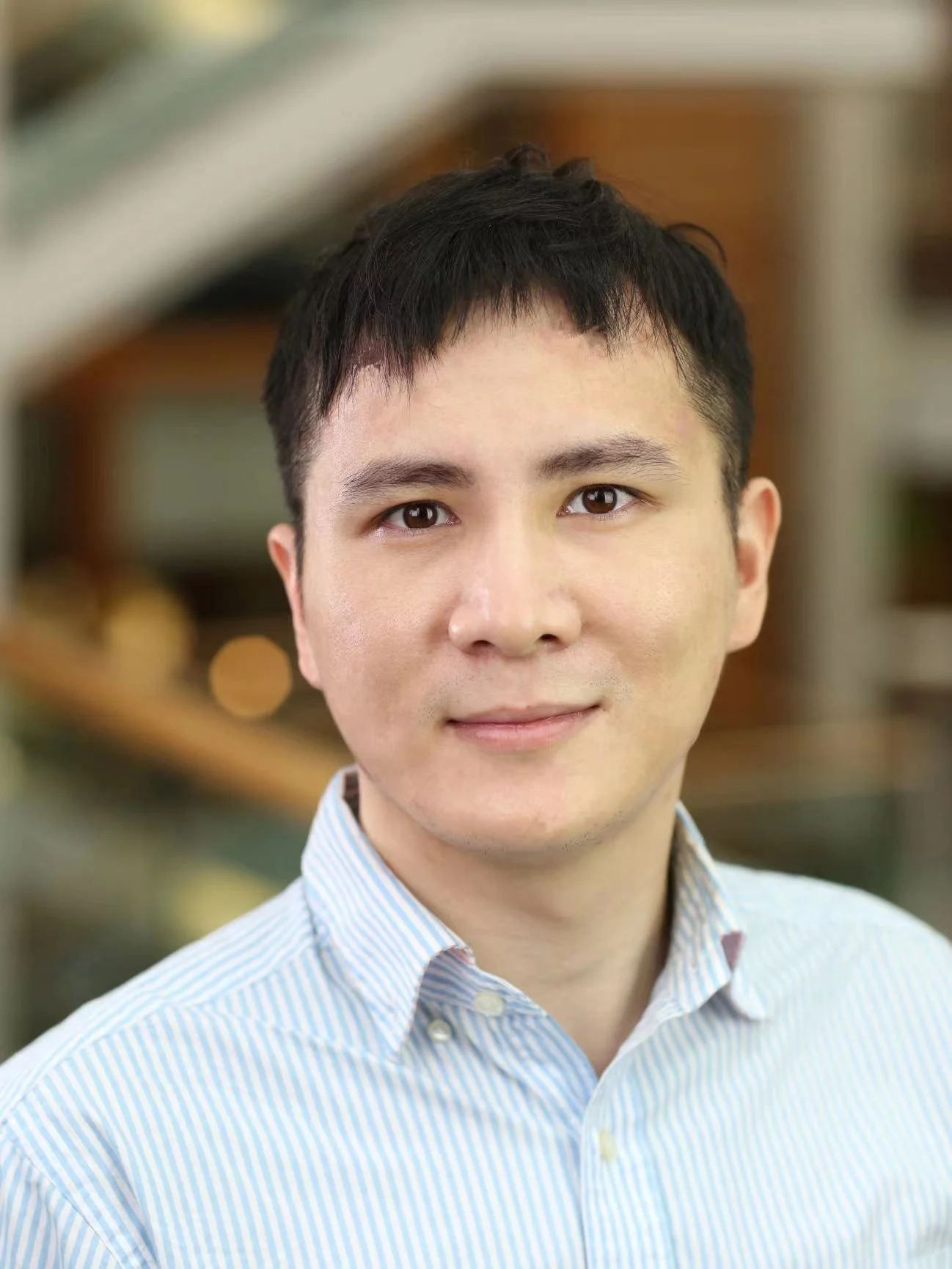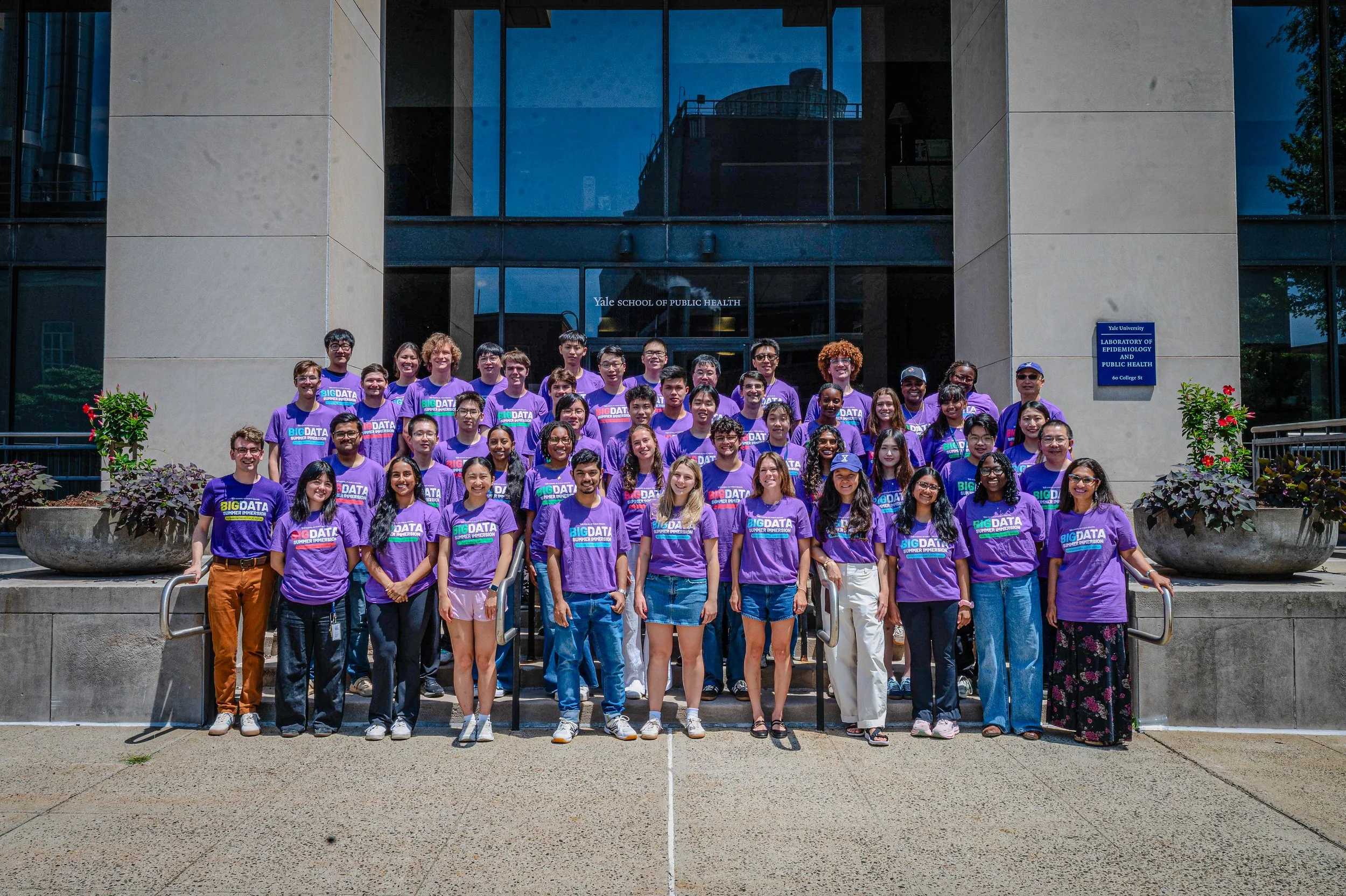
BDSY 2026
Mentored Research
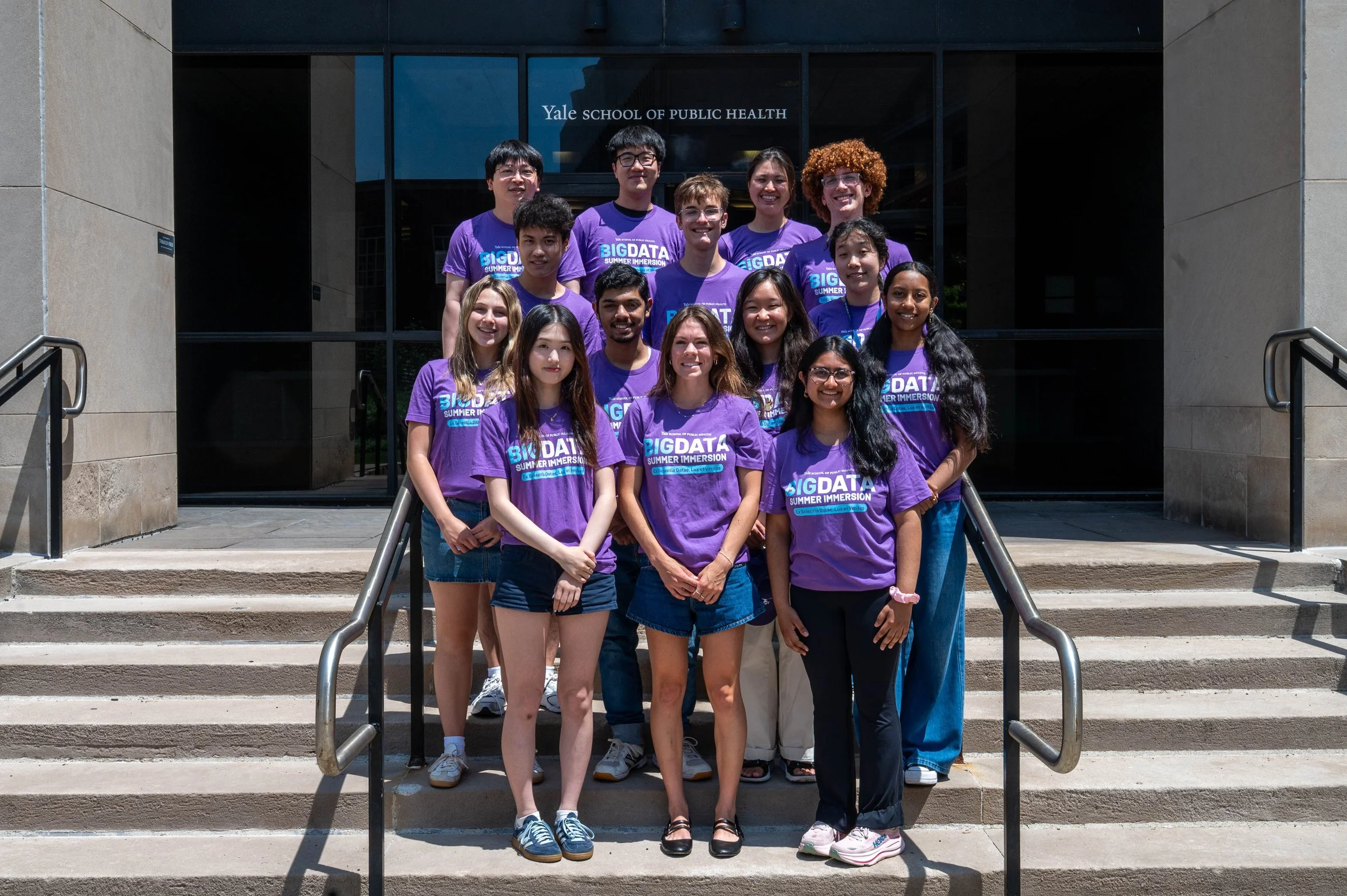
During BDSY, students are organized into teams of around 10, each working on a distinct project in biomedical or public health research. Each team is guided by one or more faculty mentors and graduate student assistants who provide support throughout the project. For the 2026 program, topics include causal inference, genetics, and electronic health records.
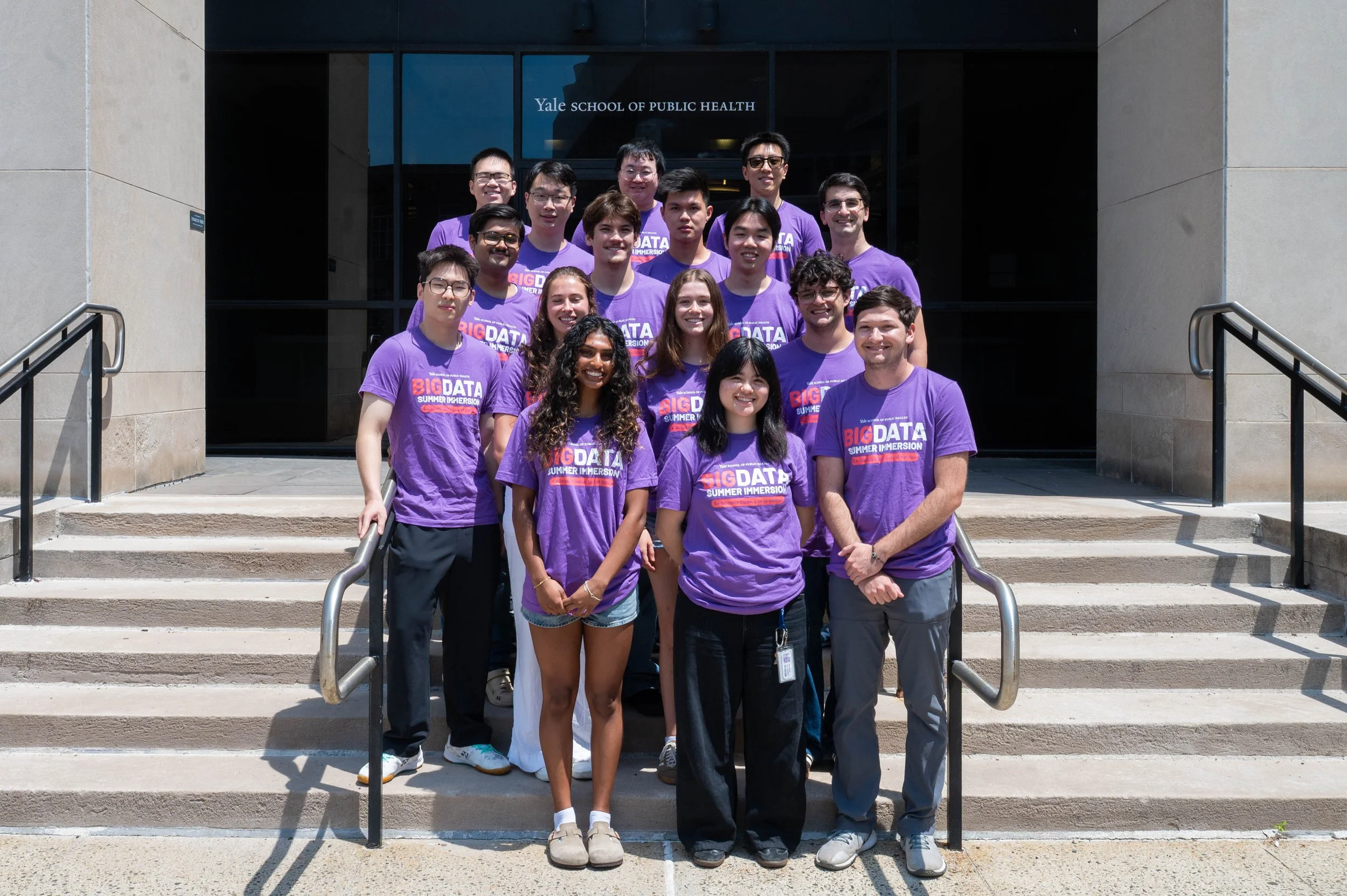
Causal Inference
Instructors:
Fan Li, PhD and Lee Kennedy-Shaffer, PhD
Graduate Student Instructors:
Zihan Zhu, PhD, Hao Wang, MS, and Changjun Li
-
Using data from three recently completed pragmatic clinical trials at the Yale School of Medicine (the ELAIA 1, ELAIA 2, and KAT trials), which evaluated electronic health record-based alert interventions for kidney care, this project focuses on exploring treatment effect heterogeneity with machine learning and discovering meaningful subgroups. Students will be organized into small working groups, each focusing on one trial. They will apply state-of-the-art causal machine learning methods, such as the Meta Learner, Bayesian Additive Regression Trees, and Bayesian Causal Forest, to explore individualized treatment effects and assess whether certain patient subpopulations benefit or do not benefit from alert-based healthcare interventions. Students will critically evaluate the assumptions behind different subgroup identification approaches and compare findings across methods. They will also collaborate across working groups to understand how trial settings affect appropriate methods and results. This is an open-ended pursuit designed to encourage innovative thinking, teamwork, and hands-on implementation, simulating real-world team science in clinical research. The project offers rigorous training in modern causal inference techniques for heterogeneous treatment effects and their application to clinical trial data.
-
-
Groups 1-3 Presentation: [Download]
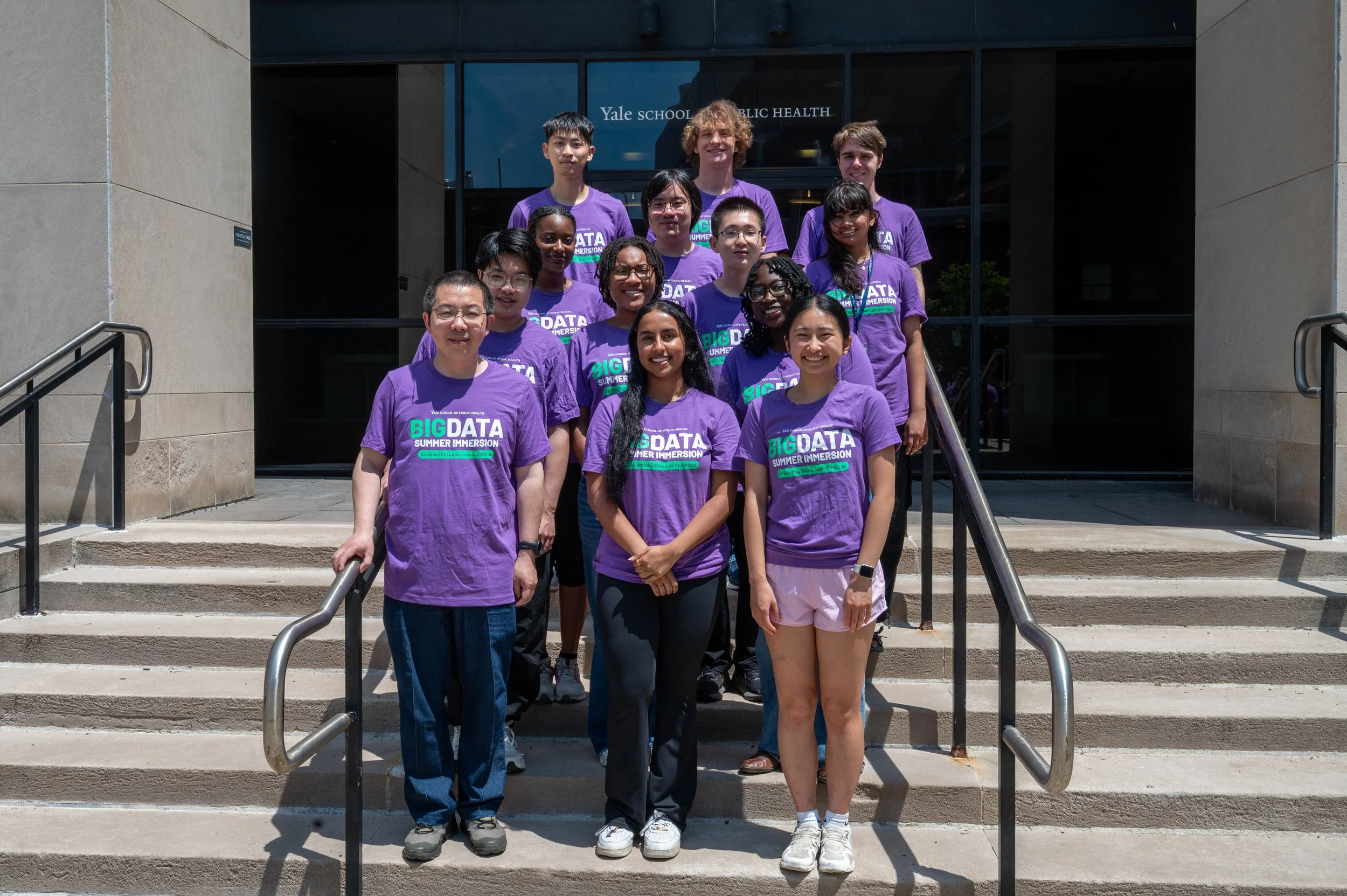
Genetics
Instructor:
Hongyu Zhao, PhD
Graduate Student Instructors:
Yueqian Jing and Haoran Shao
-
This project explores the genetic basis of disease comorbidity through integrative analyses of genome-wide, transcriptome-wide, and proteome-wide association studies. Students will learn to identify shared genetic variants across multiple diseases and quantify their impact on disease pathways. Through hands-on analysis, they will gain skills in genetic epidemiology, bioinformatics, and statistical genetics. Computational tools will be used to interpret complex genetic data and uncover biological mechanisms of disease. Students will work in teams to develop reports and presentations based on their findings. This experience prepares students for future careers in biomedical data science and genetics research.
-
-
Groups 1-3 Presentation: [Download]
Electronic Health Records
Instructors:
Cheng-Han Yang, PhD and Henan Xu, PhD
Graduate Student Instructors:
Waveley Qiu
-
This project uses the MIMIC-IV dataset and focuses on prediction using inpatient electronic health record data, particularly repeated biomarker measurements as outcomes. Students will begin with basic regression models and linear mixed-effects models for repeated biomarker measurements, and then explore more flexible approaches such as penalized regression, random forests, XGBoost, and selected sequence models such as RNNs and LSTMs. They will learn how to construct features from longitudinal EHR data and evaluate predictive performance using measures such as prediction error, discrimination, and calibration. The project will also examine how to deal with missing data in lab measurements, including imputation-based approaches, and how these choices affect model performance and interpretation. Students will critically evaluate the strengths and limitations of statistical and machine learning methods for longitudinal EHR data. The project offers rigorous training in modern EHR data analysis and predictive modeling using real-world inpatient data.
-
-
Groups 1-3 Presentation: [Download]
Lecture Topics
by Week
-
Intro to programming in R, tidyverse, and leveraging AI-assisted coding Shelby Golden, MS
Probability Sean McGrath, PhD
Basic Statistics Sean McGrath, PhD
Sources of Bias in Observational Data Fan Li, PhD
Git and GitHub Shelby Golden, MS
Linear Regression Ruyi Liu, PhD Candidate
Study Design & Estimation Fan Li, PhD
Parameter Estimation/Likelihood Hao Wang, PhD Candidate
Coding with Claude Ted Ellsworth, PhD
How to conduct a literature review Kate Nyhan, MLS
Introduction to Python Justin DeMayo
-
Data Mining I Zhenia Rudyk, PhD Candidate
Python I Shivam Sharma
Logistic Regression Henan Xu, PhD
Sports Statistics Brian Macdonald, PhD
Applying to the UK for graduate studies and personal journey Sam Lambert, PhD
Refresher on Linear Algebra Henan Xu, PhD
Fairness/ethics in Genetics and Risk Prediction Sam Lambert, PhD
Python II Shivam Sharma
Prediction for Beginners Lillian Rountree, PhD Candidate
Data Mining II Zhenia Rudyk, PhD Candidate
Visualization using ggplot2 Shelby Golden, MS
HPC Training Aya Nawano, PhD and Michael Rothberg, PhD
Machine Learning I Zhenia Rudyk, PhD Candidate
Using AI for Visualization Justin DeMayo
Imposter Syndrome Karin Gosselink, PhD
AI in Genetics and Genomics Qiao Liu, PhD
-
Machine Learning II Zhenia Rudyk, PhD Candidate
Causal Inference in Decision Making Harsh Parikh, PhD
Statistical Challenges in Firearm Injury and Gun Violence Guangyu (Tony) Tong, PhD
Cancer Epidemiology Leah Ferrucci, PhD, MPH
Data Equity in Data Science and Artificial Intelligence Bhramar Mukherjee, PhD
Causal Inference Lee Kennedy-Shaffer, PhD
Case Analysis of Biomarker PFAS Exposure and Health Outcomes Zeyan Liew, PhD, MPH
Introduction to DAGS Peter Tennant, PhD
-
Variable Selection Shuangge (Steven) Ma, PhD
Research at the Intersection of Statistics and Medicine Elizabeth Claus, PhD, MD
Preparing for Graduate School in Biostatistics Elizabeth Claus, PhD, MD
User-Centered Design of Digital Health Tools Terika McCall, PhD, MPH, MBA
Design and Analysis of Clinical Trials Denise Esserman, PhD
Collaboration in the Life of a Statistician Denise Esserman, PhD
Infectious Disease Modeling Abhishek Pandey, PhD
Data Privacy Hyunghoon (Hoon) Cho, PhD
-
Ethics and Questions of AI Consciousness John Pittard, PhD
RSV and Vaccine Dan Weinberger, PhD
AI for Community Health Ruchit Nagar, MD, MPH
AI in Global Health Brian Wahl, PhD, MPH
Differential Privacy Kumar Kshitij Patel, PhD
Large Language Models Shivam Sharma
Poster and Presentation for Biostatistics/Genetics Mike Sweeney, PhD Candidate
Randomized Trials in Economics Mushfiq Mobarak, PhD
Scientific Communication: Writing and Presentation Jackson Higginbottom, MPH
Critical Computing Julian Posada, PhD
Writing Your CV Felicia Spencer
-
Selection Bias and Representativeness Haidong Lu, PhD
Graduate Studies in CDE and EMD Albert Ko, MD and Andrew DeWan, PhD, MPH
Lectures Week 1
-
![]()
Introduction to Cluster, R and Tidyverse
Shelby Golden, MS
-
![]()
Probability
Sean McGrath, PhD
-
![]()
Basic Statistics
Sean McGrath, PhD
-
![]()
Sources of Bias in Observational Data
Fan Li, PhD
-
![]()
Git and GitHub
Shelby Golden, MS
-
![]()
Linear Regression
Ruyi Liu, PhD Candidate
-
![]()
Study Design & Estimation
Fan Li, PhD
-
![]()
Parameter Estimation/Likelihood
Hao Wang, PhD Candidate
-
![]()
AI for Community Health
Ruchit Nagar, MD, MPH
-
![]()
Introduction to Python
Justin DeMayo
-
![]()
Coding with Claude
Ted Ellsworth, PhD
-
![]()
How to Conduct a Literature Review
Kate Nyhan, MLS



Lectures Week 2
-
![]()
Data Mining I
Zhenia Rudyk, PhD Candidate
-
![]()
Python I
Shivam Sharma
-
![]()
Logistic Regression
Henan Xu, PhD
-
![]()
Sports Statistics
Brian Macdonald, PhD
-
![]()
Applying to the UK for graduate studies and personal journey
Sam Lambert, PhD
-
![]()
Refresher on Linear Algebra
Henan Xu, PhD
-
![]()
Fairness/ethics in Genetics and Risk Prediction
Sam Lambert, PhD
-
![]()
Python II
Shivam Sharma
-
![]()
Prediction for Beginners
Lillian Rountree, PhD Student
-
![]()
Data Mining II
Zhenia Rudyk, PhD Candidate
-
![]()
Visualizing Data in R with ggplot2
Shelby Golden, MS
-
![]()
HPC Training
Aya Nawano, PhD
-
![]()
Imposter Syndrome
Karin Gosselink, PhD




Lectures Week 3
-
![]()
Machine Learning II
Zhenia Rudyk, PhD Candidate
-
![]()
Causal Inference in Decision Making
Harsh Parikh, PhD
-
![]()
AI Learns from Us-And Shapes Us, Implications for Ethics and Equity
K. Sudhir, PhD
-
![]()
Cancer Epidemiology
Leah Ferrucci, PhD, MPH
-
![]()
Data Equity in Data Science and Artificial Intelligence
Bhramar Mukherjee, PhD
-
![]()
Causal Inference
Lee Kennedy-Shaffer, PhD
-
![]()
Case Analysis of Biomarker PFAS Exposure and Health Outcomes
Zeyan Liew, PhD, MPH
-
![]()
Introduction to DAGS
Peter Tennant, PhD

Lectures Week 4
-
![]()
Variable Selection
Shuangge Ma, PhD
-
![]()
Research at the Intersection of Statistics and Medicine
Elizabeth Claus, PhD, MD
-
![]()
Preparing for Graduate School in Biostatistics
Elizabeth Claus, PhD, MD
-
![]()
User-Centered Design of Digital Health Tools
Terika McCall, PhD, MPH, MBA
-
![]()
Design and Analysis of Clinical Trials
Denise Esserman, PhD
-
![]()
Collaboration in the Life of a Statistician
Denise Esserman, PhD
-
![]()
Infectious Disease Modeling
Abhishek Pandey, PhD
-
![]()
Data Privacy
Hyunghoon (Hoon) Cho, PhD
-
![]()
Math-adjacent Research
Daniel Spielman, PhD

Lectures Week 5
-
![]()
Ethics and Questions of AI Consciousness
John Pittard, PhD
-
![]()
RSV and Vaccine
Dan Weinberger, PhD
-
![]()
AI for Community Health
Ruchit Nagar, MD, MPH
-
![]()
AI in Global Health
Brian Wahl, PhD
-
![]()
Differential Privacy
Kumar Kshitij Patel, PhD
-
![]()
Scientific Communication: Writing & Presentation
Jackson Higginbottom, MPH
-
![]()
Poster and Presentation for Biostatistics/Genetics
Mike Sweeney
-
![]()
Randomized Trials in Economics
Mushfiq Mobarak, PhD
-
![]()
Critical Computing
Julian Posada, PhD
-
![]()
Transdisciplinary Research on Climate and Health in Cities
Jeannette Ickovics, PhD






Lectures Week 6
-
![]()
Selection Bias and Representativeness
Haidong Lu, PhD
-
![]()
Graduate Studies in CDE
Andrew DeWan, PhD
-
![]()
Graduate Studies in EMD
Albert Ko, MD